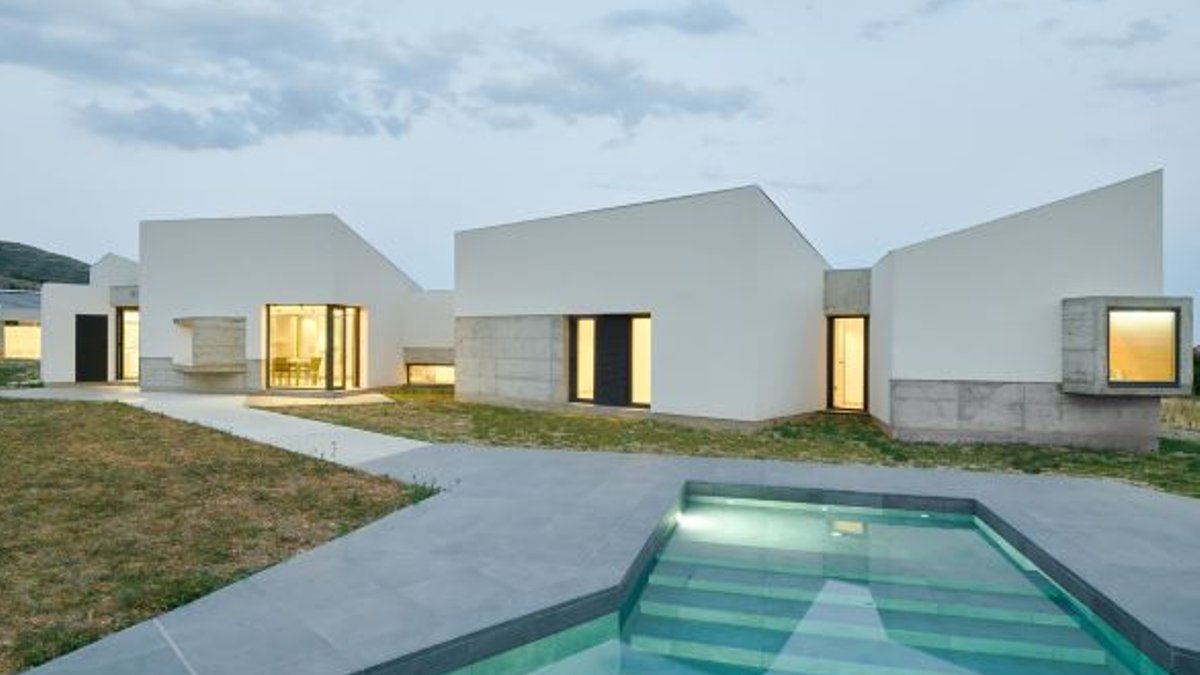
The combination of technical precision and durability is changing how swimming pools are built. Gres Aragón has introduced a new solution designed to address the complexity of pool construction. The firm’s ACEPOOL line utilizes ceramic extrusion to provide a complete construction system. This approach focuses on technical precision and durability rather than just surface aesthetics.
One of the most complex systems in architecture
Designing a swimming pool means resolving a system in which water, structure, ceramics, and construction details must work together as a whole. Traditional pool design often focuses on the visual aspect: the color of the water, the surface finish, and how the basin fits into its environment. From a construction standpoint, however, a swimming pool is one of the most complex systems in any project.
This complexity arises from the demands placed on the structure. The pool must handle exposure to water, temperature fluctuations, and solar radiation. Safety requirements, chemical usage, and continuous human use demand precise solutions at every junction. This includes drainage points, access points to the basin, and corners. The quality of the overall system depends on the material’s ability to bring all these variables together, not just the visual appeal of the design.
Related: Anatolia and Aeterna return to Cersaie in September
Gres Aragón developed ACEPOOL as a response to this challenge. The company views the swimming pool as a complete construction system based on extrusion technology. This perspective shifts the focus from individual tiles to coordinated functional components.
One of the clearest indicators of a swimming pool’s quality is how its construction details are resolved. At edges, corners, steps, drainage channels, and overflow systems, issues as varied as user safety, water drainage, hygiene, durability, and the continuity of the surface finish must all be addressed simultaneously.
ACEPOOL offers a coordinated solution to meet these requirements. The system includes functional components like coping, steps, coved pieces, overflow edges, drainage channels, grates, and transition pieces. These are designed to fit together as a single system, improving both installation and pool performance throughout its service life.
The ability to address this wide range of situations begins with the manufacturing process itself. Ceramic extrusion makes it possible to produce three-dimensional profiles tailored to the requirements of each construction detail. Function is no longer achieved through on-site adjustments. Instead, it is integrated into the geometry of each piece.
Related: Nonresidential construction hiring stays strong in July
Form no longer depends on subsequent machining or improvised solutions during installation. Instead, it is defined during manufacturing, ensuring precision, continuity, and construction reliability. This design freedom enables the development of components that fit perfectly together. Extrusion thus becomes more than a manufacturing technology; it is a genuine design tool that creates a unified system across the pool’s surface.
Most construction relies on the skill of the installer to bridge gaps and seal seams, a process that naturally invites wear and tear over time. In environments like swimming pools, where water and chemicals constantly attack the joints, manual assembly becomes a weak point. By manufacturing the surfaces with three-dimensional profiles, the gaps are physically eliminated. The material is no longer an empty canvas that must be adjusted, but a finished tool that fits perfectly into the surrounding architecture. This shift moves the reliability of the structure from the labor force to the factory line.
Geometry as a manufacturing tool
ACEPOOL is conceived as a system that simplifies installation and enhances the overall performance of the pool. By incorporating components tailored to each specific function, it reduces on-site adjustments. This promotes continuity between elements, improves water drainage, and ensures greater reliability across the entire system.
Related: KBIS 2027 calls for presenters in Las Vegas
The advantages are complemented by the inherent performance characteristics of extruded porcelain stoneware. This material offers extremely low water absorption, high mechanical strength, and resistance to chemicals. The components also feature slip resistance and frost resistance. These properties are essential to ensuring durability in environments exposed to particularly demanding conditions.
Performance features and global reach
Gres Aragón-Faveker has decades of experience.
Founded in 1943, the company has evolved from its origins in working with clay and fire into an innovative manufacturer equipped with cutting-edge technology. The firm specializes in ceramic materials for contemporary architecture. It operates globally, with international markets accounting for about 60% of its sales. Products from Gres Aragón are available in roughly 100 countries, extending from Spain and the European Union to North America and the Arab world. The company’s in-house production capabilities, encompassing both extrusion and porcelain technologies, make it a significant player in the international ceramics sector.


